
How to Plan a Home Theatre in India: Start With Your Use Case (Masterclass Ep 1)
Before comparing AVRs, speakers or projectors, decide what the room will actually be used for, because that one answer controls every rupee that follows. Episode 1 of our Home Theatre Masterclass shows how to plan from the use case down.

"Which AVR should I buy?" is the question we hear first, and it is almost never the right first question. Episode 1 of the AV Kart Home Theatre Masterclass starts where the spend actually gets decided: what will this room be used for? Watch the episode below, then read on.
Use case before shopping list
Most home theatre projects in India start at the wrong end: a shortlist of receivers, a favourite speaker brand, a projector someone saw on YouTube. It feels like progress. It skips the one decision that controls everything after it.
A room built for late-night movies is a different room from one hosting a cricket final for fifteen people, and different again from a music-first space that occasionally plays films. Same budget, three completely different builds. Get the use case right and speaker count, seating, acoustics and calibration fall into place. Get it wrong and you pay twice: once for the system, once for correcting it.
The three use cases most buyers land in
1. Movies-first, dedicated cinema. Immersion is the brief. This is where a full Dolby Atmos layout, a proper subwoofer (or two), acoustic treatment and a light-controlled room earn their keep. If you can darken the space and close the door, reference-level performance is on the table.
2. Music plus movies. A dual-purpose room that has to hold up on a stereo track as well as a blockbuster. Speaker quality and front-stage accuracy matter more here than raw channel count. Nobody has ever fixed a mediocre pair of front speakers by adding four more mediocre ones.
3. Living-room multipurpose. The family space that also plays films and matches. Ambient light, open walls and WAF (the will-the-family-approve factor) drive the design, usually toward a clean 5.1 or 5.1.2, in-wall or in-ceiling speakers and a bright, laser-driven picture. The family veto is a design constraint, not an obstacle; the earlier it enters the plan, the cheaper it is.

A dedicated movies-first build: our 7.2.2 THX Ultra cinema in Jaipur. Click to tour it.
Room first, gear second
Once the use case is clear, the room sets the limits, not the brochure. Dimensions decide how many speakers make sense and where they can physically go. Seating distance decides screen size. And the room's acoustics decide how much of your expensive gear you actually hear.
This is why placement and calibration are not afterthoughts. A well-placed subwoofer in a cooperative room will beat a bigger subwoofer fighting a bad corner every single time. The corner does not care what the subwoofer cost.

Placement matters more than price: the subwoofer crawl method, explained.
Where projects usually go wrong
Three patterns repeat, install after install: buying the gear before measuring the room; over-buying channels a small room can never resolve; and skipping professional calibration (a paid service, and the line item people cut first) on a system that cost lakhs. That last one is roughly like buying good fabric and skipping the tailor.
The use-case conversation prevents all three, because it forces the real questions to the front of the process: how big, how dark, how many people, how loud, how often.
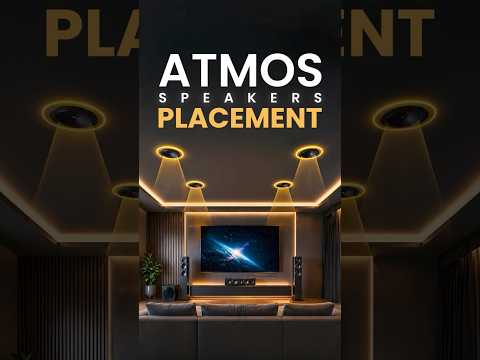
Getting Atmos height speakers right depends entirely on the room: another use-case-driven decision.
Your next step
Watch Episode 1 above, then be truthful about how the room will really be used before you spend anything. If the correct answer turns out to be "do not buy anything yet," that is a perfectly good outcome. And if you want a second opinion, that is exactly what we do.
- Free room consultation: tell us your room and your use case and we will help you plan it properly. WhatsApp +91 88820 19272 or call 10:00 AM to 07:00 PM.
- Browse the gear: explore authorised-dealer AV receivers, speakers and projectors at audiovisualkart.com.
- Never miss an episode: subscribe to the AV Kart YouTube channel and join our VIP list on the website for new drops, offers and Masterclass episodes.
The Home Theatre Masterclass is a multi-part series. Episode 1 is the foundation: get the use case right and everything after it gets easier.
Still deciding?
Ask us what this means for your room.
News tells you what changed. If you want to know whether it changes anything for your setup, ask — we answer real questions publicly.
Ask AV Kart