
Marantz Cinema Series 2 (2026): Cinema 50, 60 & 70s Explained for Indian Home-Theatre Buyers
The Marantz Cinema Series 2 receivers (Cinema 50, 60 and 70s) are an evolutionary update: new 32-bit DACs, Dirac Live upgradeability across all three models, and updated gaming support. Choose by room and listening level, not by the length of the spec sheet.

Marantz has refreshed three of the most important models in its home-theatre range. Announced in August 2026, the new Cinema Series 2 line-up covers the Cinema 50 Series 2, Cinema 60 Series 2 and slimline Cinema 70s Series 2.
My reading up front: this is an evolutionary update, not a redesign, and that is fine. The styling, channel counts and headline power ratings carry over; the meaningful movement is upgraded digital audio hardware, broader Dirac Live support and updated gaming compatibility. Nobody who bought the outgoing models needs to feel robbed.
Here is an India-focused breakdown of what has changed, what has not, and which receiver suits which room.
Specifications in this article are based on Marantz's official US product pages and information sheets. Features, licences, pricing and availability may vary by region. Please confirm current India specifications, warranty and stock with us before purchasing.
Update, 20 September 2026. Two things have moved since this article first went up, and both of them land on the Cinema 70s Series 2.
First, availability. Harman's launch release put the Cinema Series 2 range on sale from 12 August 2026, with the Cinema 70s Series 2 following on 15 September 2026. That date has now passed, so the Series 2 models are shipping globally.
Second, and the more useful one: Dirac confirmed on 9 September 2026 that Dirac Live Room Correction now supports the Cinema 70s Series 2, alongside the MCR 60n and MCR 60n DAB. When this article was written, "Dirac Live upgradable" on the 70s was a stated intention. It is now a licence you can actually buy. According to Dirac, the correction works on both magnitude and phase behaviour in the room, which is the part that simple equalisation leaves untouched. Plausible as an engineering description, and consistent with how Dirac Live behaves elsewhere, but the audible size of it in your room is still a measurement question rather than a press release question.
My position has not changed. This is the most interesting single development for the slim model, because the rooms a 70s tends to end up in (living rooms, tile, glass, speakers placed where the furniture allows rather than where acoustics would prefer) are exactly the rooms with the most to gain. But owning the licence is not the same as being calibrated. The licence gives you the tool. Microphone positions, crossover choices and target curve still decide whether the result is better or just different.
India pricing for Series 2 is still not announced. For reference, Harman's own launch release lists the Cinema 50 Series 2 at USD 3,000 and the Cinema 60 Series 2 at USD 2,000, with the Cinema 70s listed at USD 1,500 in the same notes to editors. Those are international figures, not India prices. Converting them at today's rate and adding duty in your head is a reliable way to be disappointed twice.
Sources: Harman newsroom, Introducing Marantz CINEMA Series 2, and Dirac's announcement of 9 September 2026 confirming Dirac Live Room Correction support for the CINEMA 70s Series 2.
What Marantz has announced
The Cinema 50 Series 2 sits at the top of this three-model group, followed by the Cinema 60 Series 2 and the compact Cinema 70s Series 2. They join the existing Cinema 40 and reference-level Cinema 30 in the wider range.
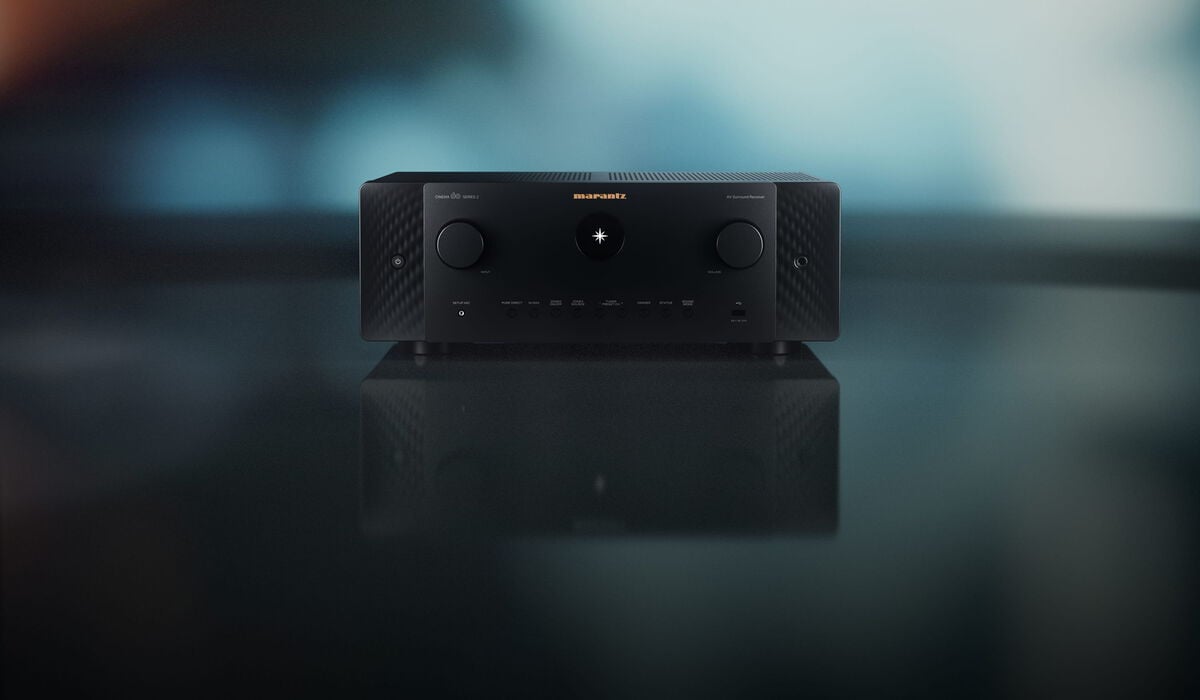
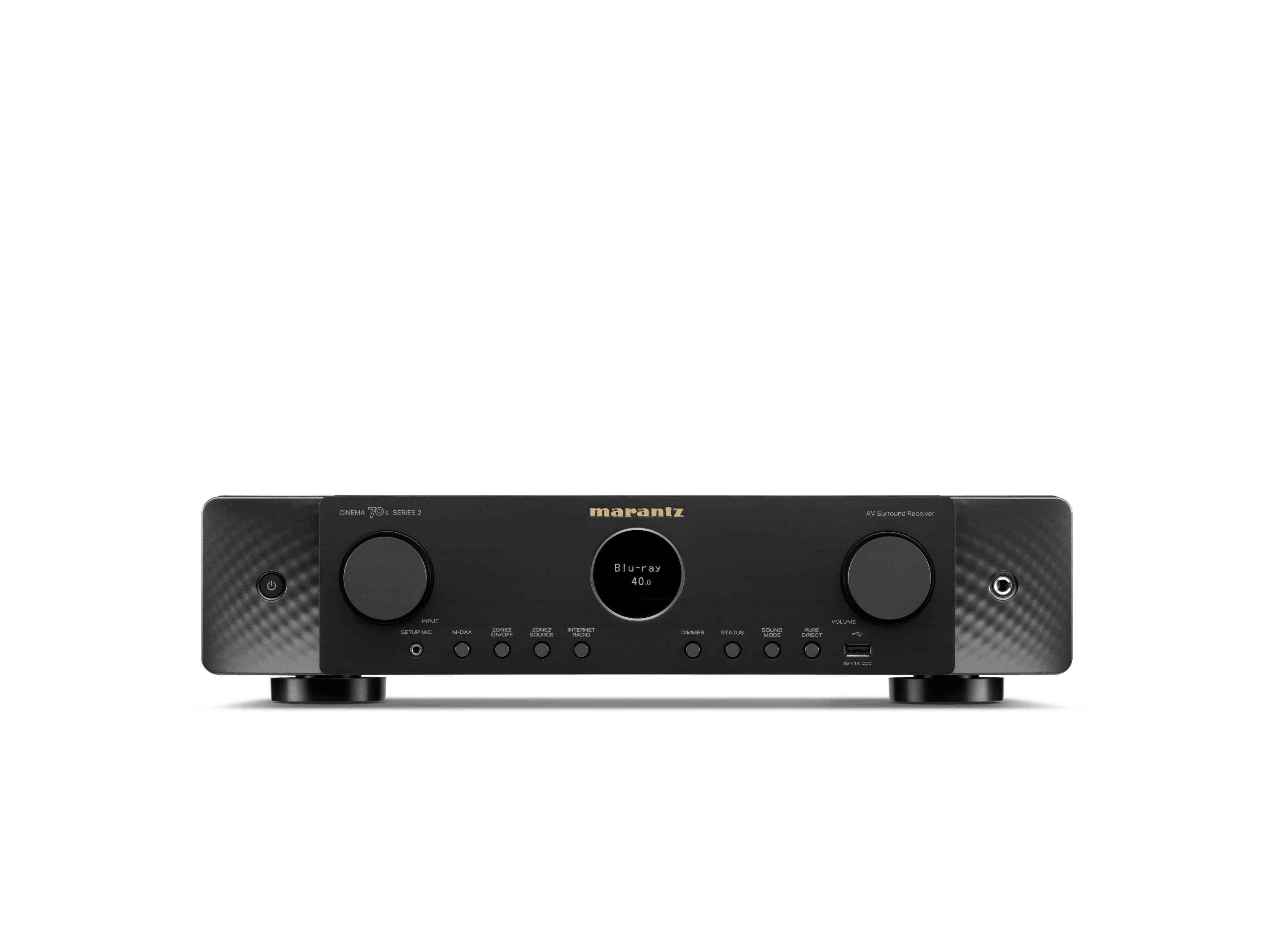
Visually, almost nothing has changed. The porthole display and understated front panel survive another generation, and I suspect the porthole will outlive HDMI. The changes that matter are inside.
The three models at a glance
| Model | Amplification and processing | Rated power | 8K HDMI inputs | Room correction | Best suited to |
|---|---|---|---|---|---|
| Cinema 50 Series 2 | 9 powered channels; up to 11.4-channel processing | 110 W per channel | 6 | Audyssey MultEQ XT32 included; Dirac Live upgrade supported | Dedicated theatres, larger rooms and expandable immersive-audio systems |
| Cinema 60 Series 2 | 7 powered channels; 7.1-channel speaker processing with two subwoofer outputs | 100 W per channel | 3 | Audyssey MultEQ XT included; Dirac Live upgrade supported | Living-room 5.1.2 or 7.1 systems |
| Cinema 70s Series 2 | 7 powered channels; 7.1-channel speaker processing with two subwoofer outputs | 50 W per channel | 3 | Audyssey MultEQ XT included; Dirac Live upgrade supported | Smaller rooms, efficient speakers and slim media furniture |
Power figures are measured into 8 ohms from 20 Hz to 20 kHz at 0.08% THD with two channels driven. They should not be interpreted as simultaneous all-channel output.
What is actually new in Series 2?
Upgraded 32-bit digital-to-analogue conversion
All three Series 2 receivers use upgraded 32-bit DAC hardware. According to Marantz, the new digital stage improves clarity, resolution and dynamic range across movies, music and games. That is the manufacturer's claim; the hardware change is real, but how audible it is in a living room is a question I would rather answer with measurements and ears than with a press sheet.
The Cinema 50 Series 2 and Cinema 60 Series 2 also use Marantz HDAM-SA2 circuitry. The Cinema 70s Series 2 does not list HDAM modules in its official technical specifications, which is worth knowing if that detail matters to you.
Dirac Live support across all three models
This is the change I care about most, particularly for the Cinema 60 and Cinema 70s. All three Series 2 receivers are now listed as Dirac Live-upgradable.
The wording matters. Audyssey room correction is included with the receiver; Dirac Live requires a compatible paid licence on top. The Cinema 50 Series 2 includes Audyssey MultEQ XT32, while the Cinema 60 Series 2 and Cinema 70s Series 2 include Audyssey MultEQ XT.
Why do I rate this feature for India specifically? Because Dirac earns its keep in reflective rooms: marble flooring, glass, large openings, awkward speaker placement. That is a fair description of most Indian living rooms. It is not a magic button, though. Microphone positioning, speaker setup, crossover selection and target-curve design still decide the final result. The software cannot change the laws of acoustics because the licence was paid promptly.
Updated gaming compatibility
All three receivers support 8K/60Hz and 4K/120Hz pass-through, along with VRR, ALLM and Quick Frame Transport. The new Series 2 specifications also list AMD FreeSync compatibility.
The Cinema 50 Series 2 provides six 8K-capable HDMI inputs. The Cinema 60 Series 2 and Cinema 70s Series 2 each provide six HDMI inputs in total, of which three support 8K signals.
Worth saying plainly: 8K, 4K/120Hz, VRR and ALLM were already on the outgoing models. Series 2 improves the platform. It does not make the previous Cinema receivers obsolete overnight, whatever the upgrade itch tells you.
HEOS, AirPlay 2 and high-resolution streaming
Powered by HEOS remains standard across the range. Each receiver streams music through the HEOS app, AirPlay 2 and supported streaming services, and can work as part of a compatible multi-room audio system.
Why this matters for Indian buyers
The receiver is one part of the system, and even accurate spec sheets cannot tell you how it behaves in your room. In practice, warranty, speaker matching, ventilation, installation and calibration often make a bigger difference than swapping one similarly specified AVR for another.
Confirm India warranty and product region
Before purchasing, confirm the receiver is official India stock with the correct voltage specification and valid India warranty, as per brand and distributor policy. A lower grey-market price becomes expensive very quickly the day the unit needs service and the service centre asks where it was billed.
As an authorised Marantz partner, Audio Visual Kart can verify the product, supply official stock and support the system after installation.
Budget for proper setup and calibration
Audyssey is included and can produce a good result when measured carefully. If you choose the optional Dirac Live upgrade, account for the licence cost and for professional calibration, which is a paid service.
Room correction cannot rescue poor speaker placement or an undersized subwoofer. Once the fundamentals are right, it can meaningfully improve tonal consistency, bass integration and imaging. That order matters: fundamentals first, software second.
Which Cinema Series 2 receiver is right for your room?
Cinema 50 Series 2
Choose the Cinema 50 Series 2 when you need nine powered channels, four independent subwoofer outputs or a path to an 11.4-channel processed system. It suits larger rooms and dedicated theatres.
One catch buyers miss: a full 7.2.4 layout uses eleven main speaker channels, so the Cinema 50 Series 2 needs an additional two-channel power amplifier for that configuration. Plan for it now rather than discovering it on installation day.
Cinema 60 Series 2
The Cinema 60 Series 2 is likely the sweet spot for most living-room installations. It powers a 5.1.2 Dolby Atmos system or a conventional 7.1, with substantially more rated output than the slimline model. If you do not need four height speakers or 11-channel processing, this is the sensible balance of performance, features and simplicity.
Cinema 70s Series 2
The Cinema 70s Series 2 exists for installations where chassis height is a real constraint. It supports the same basic 5.1.2 or 7.1 layouts as the Cinema 60 Series 2 but is rated at 50 watts per channel rather than 100.
That difference matters. Slim cabinets get bought for the furniture, not the physics, and the physics does not read the brochure. Pair the 70s with reasonably efficient speakers in a small or medium room and it is a lovely unit. Treat it as a Cinema 60 squeezed into a thinner box and you will run out of clean output exactly when the film gets interesting.
Not sure how many channels your room can actually use? Our room-matching consultation looks at seating distance, speaker sensitivity, room volume, listening level and future upgrade plans before recommending an AVR. More channels than the room supports is just more heat.
See a Marantz Cinema system in a real Indian home
Here is one of our dedicated cinema projects in Jaipur: a Marantz Cinema receiver, a Klipsch THX speaker system and a Sony 4K laser projector. It shows what correct system design, installation and calibration achieve better than any specification table can.
India price and availability
The Cinema Series 2 range was announced globally in August 2026 and is now shipping internationally, with the Cinema 70s Series 2 released on 15 September 2026. India pricing, launch dates and initial stock allocation are still being confirmed. Message us for the latest India MRP, selling price, warranty information and expected delivery timeline before placing an order or planning a budget around a converted US price.
Talk to us before you upgrade
A receiver should be selected around the room, the speakers and how loud you actually listen, not by picking the model with the longest specification sheet.
Audio Visual Kart can help you plan the speaker layout, select the correct Marantz receiver, supply authorised stock and calibrate the completed system.
- Browse Marantz AVRs: Marantz AV receivers and separates at Audio Visual Kart
- Free room-matching consultation: WhatsApp us at +91-88820 19272 with your room dimensions, speaker list and seating distance.
- Professional room calibration: ask about our paid Audyssey and Dirac Live calibration services.
- New-product updates: visit audiovisualkart.com for India pricing, availability and offers.
Official Marantz sources: Cinema 50 Series 2, Cinema 60 Series 2 and Cinema 70s Series 2. Specifications and regional features are subject to change.
Still deciding?
Ask us what this means for your room.
News tells you what changed. If you want to know whether it changes anything for your setup, ask — we answer real questions publicly.
Ask AV Kart